
Whale Watching Season in Cabo San Lucas: Best Time to See Whales, Monthly Guide & What to Expect
Your complete guide to seeing humpback whales in Los Cabos, Baja California Sur.
Every winter, something extraordinary happens off the coast of Cabo San Lucas. Humpback whales arrive in the waters of Baja California Sur after traveling thousands of miles from their northern feeding grounds. Some come to mate, others to give birth, and mothers arrive with newborn calves that will spend their first months of life in the warm waters of the Mexican Pacific.
For visitors, this creates one of the most spectacular wildlife experiences in Los Cabos: whale watching.
But when is the best time to see whales in Cabo San Lucas? Are there more whales in January or February? Can you see baby whales? And what should you expect when heading out into the ocean?
In this guide, Animalia Ocean Excursions shares what you need to know about the whale watching season in Cabo San Lucas, including a month-by-month breakdown, whale behavior, ocean conditions and practical tips to make the most of your experience.
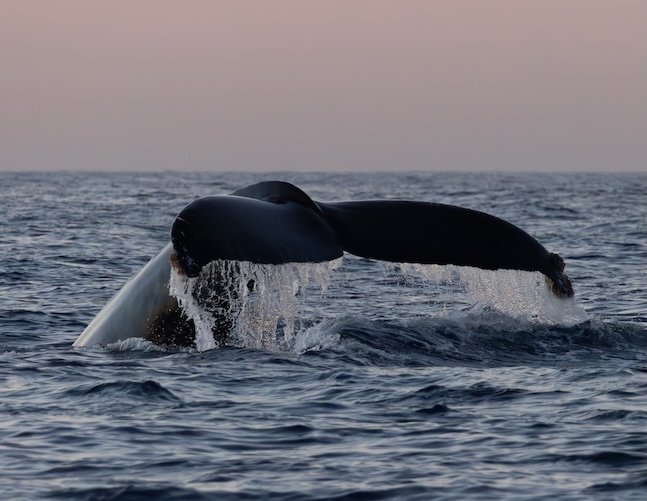
Quick Guide: Whale Watching Season in Cabo San Lucas
Whale species: Primarily humpback whales (Megaptera novaeangliae).
General season: December through April.
Official 2026–2027 observation season: December 15, 2026 – April 30, 2027.
Best months: January, February and March generally offer excellent opportunities.
Best chance of seeing mothers and calves: Mid-to-late season, particularly January through March.
Typical tour duration: Approximately 2–3 hours, depending on the operator.
Where to go: Cabo San Lucas and the surrounding coastline of Los Cabos.
When Is Whale Watching Season in Cabo San Lucas?
The whale watching season in Cabo San Lucas generally runs from December through April, when humpback whales migrate from the colder waters of the North Pacific to the warmer breeding areas along Mexico’s Pacific coast.
During this period, whales can be spotted around Cabo San Lucas, San José del Cabo and the southern Baja California Peninsula.
The Mexican government establishes specific dates each year for authorized commercial whale watching activities. For the 2026–2027 season, SEMARNAT has authorized observation activities in the Cabo San Lucas protected area and San José del Cabo from December 15, 2026, through April 30, 2027.
It is important to understand that the biological whale season and the official tourism season are not exactly the same thing. Whales may arrive in the region before the authorized observation period begins.
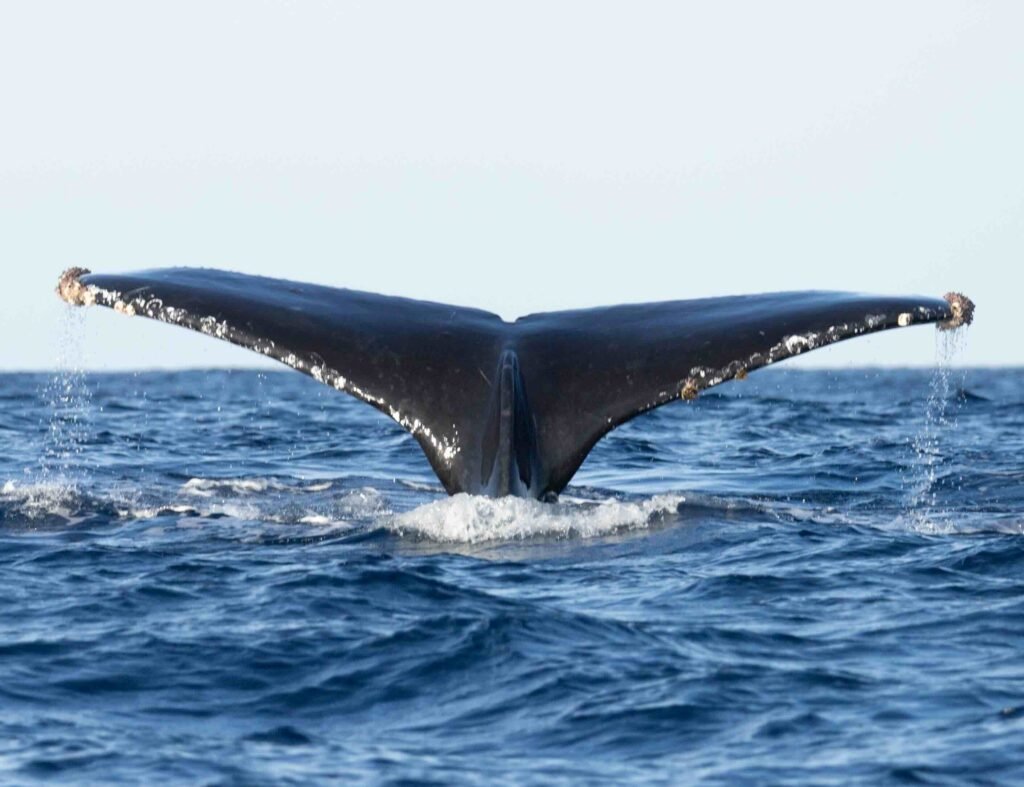
What is the best month to see whales in Cabo?
January, February and March are generally excellent months for humpback whale watching in Los Cabos.
During these months, whale activity can include courtship groups, surface displays, mothers swimming with calves and individuals resting or traveling through the area.
February and March are also identified as peak viewing months for humpback whales around Cabo San Lucas and San José del Cabo in the International Whaling Commission’s Mexico whale watching guide.
However, there is no single perfect month for every type of encounter. If you want to see newborn calves, experience spectacular surface activity or simply enjoy a close look at these magnificent animals, each part of the season offers something different.
Whale Watching in Cabo San Lucas: Month-by-Month Guide
One of the most common questions visitors ask is whether there is a significant difference between seeing whales in December, January, February, March or April.
The answer is yes. Although whales can be present throughout the season, their numbers, behavior and distribution change as the winter progresses.
December: The Beginning of Whale Season
December marks the beginning of the whale watching season in Cabo San Lucas.
The first humpback whales begin arriving in the region as they migrate south from their northern feeding grounds. Activity generally builds as more animals reach the breeding areas.
The second half of December is particularly interesting because it coincides with the opening of the official whale watching season in Cabo.
What might you see in December?
Humpback whales arriving in the region.
Individuals traveling along the coastline.
Early courtship activity.
Breaching and other surface behaviors.
Groups of whales interacting offshore.
December is an exciting time to visit, especially if you are already planning a holiday vacation in Los Cabos.
January: An Excellent Time for Whale Watching
January is one of the most rewarding months for whale watching in Cabo San Lucas.
By this point, many humpback whales have reached their winter breeding grounds. Courtship activity can become more noticeable, and visitors may encounter groups of whales interacting at the surface.
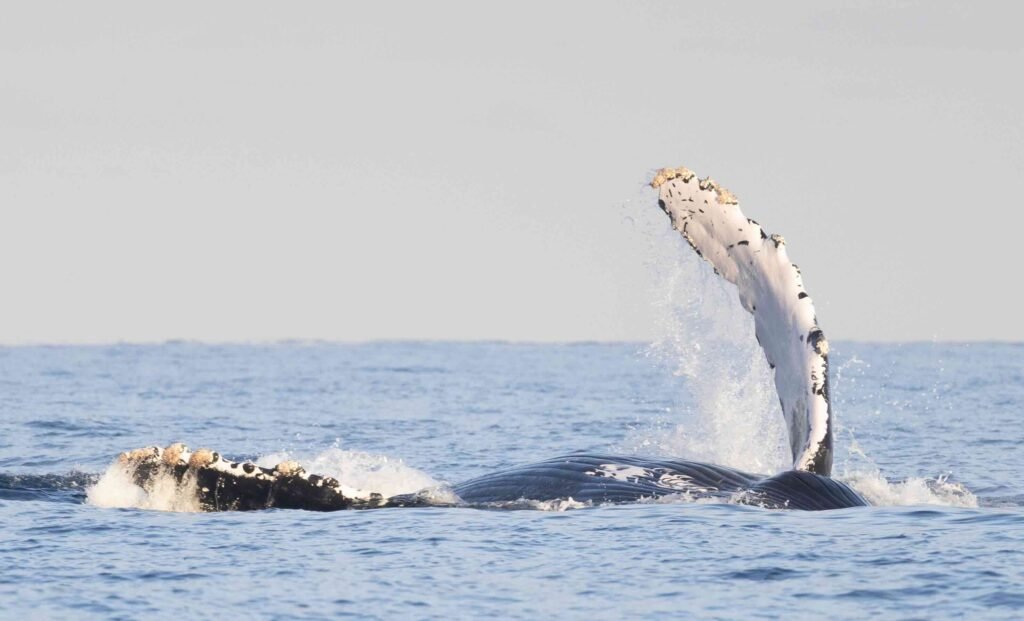
You may witness spectacular behaviors such as breaching, tail slapping, pectoral fin slapping and spyhopping.
January is also a good time to look for mother-calf pairs as calves are born in the breeding areas during the winter season.
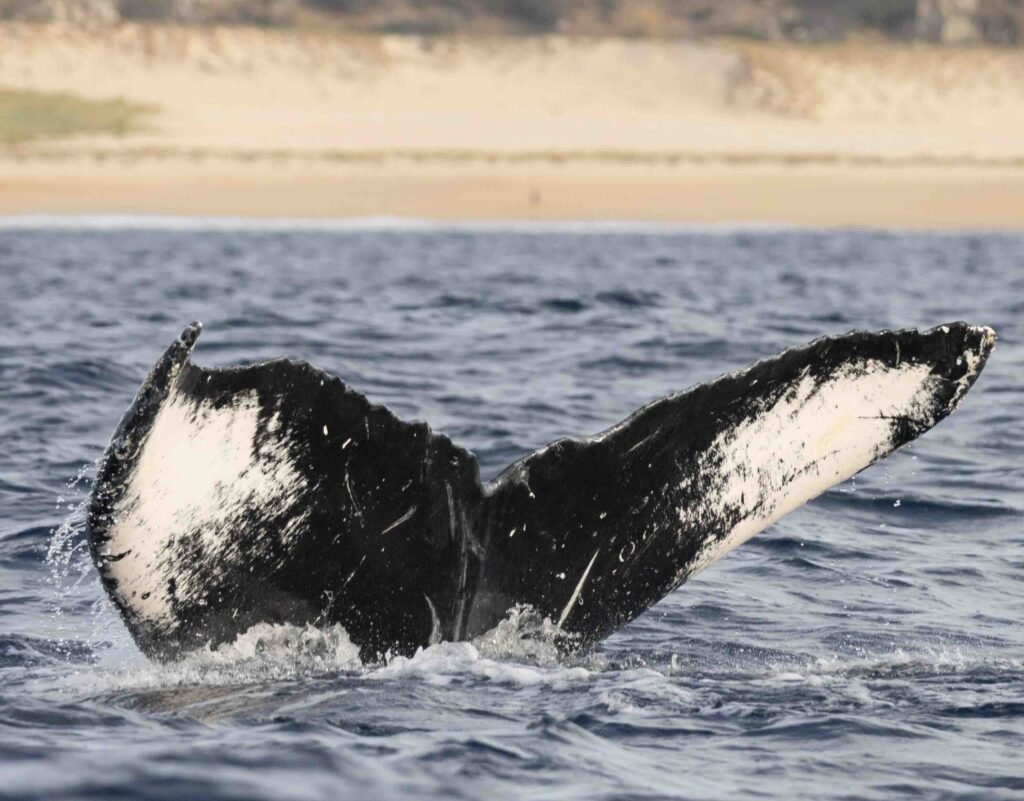
What might you see in January?
Active humpback whales.
Courtship groups.
Mothers swimming with young calves.
Breaching and tail displays.
Whales surfacing and diving around the boat.
If your vacation dates are flexible, January is an excellent choice.
February: One of the Best Months to See Humpback Whales
February is generally considered one of the peak months for whale watching in Los Cabos.
The region continues to host humpback whales involved in breeding, nursing and early calf development.
This is an especially interesting period for visitors hoping to observe different types of whale behavior during the same excursion.
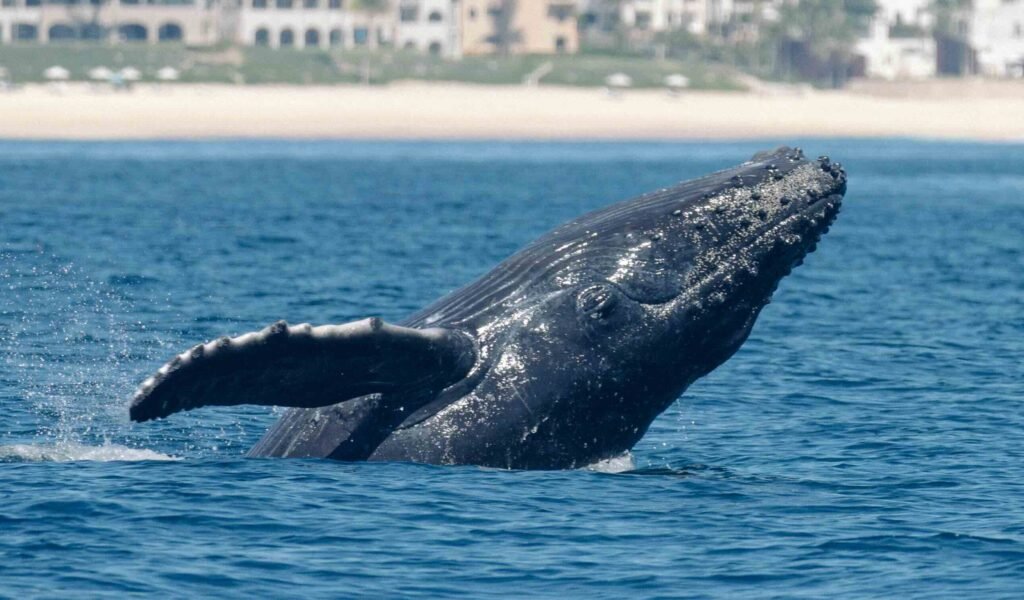
You may see a large whale launching its entire body out of the water, a mother carefully swimming alongside her calf, or a group of whales interacting near the surface.
What might you see in February?
Mother-calf pairs.
Young calves learning to swim and surface.
Courtship and social interactions.
Powerful tail slaps and spectacular breaches.
Humpback whales moving through the coastal waters.
February is one of my recommended months for anyone planning a dedicated whale watching experience in Cabo San Lucas.
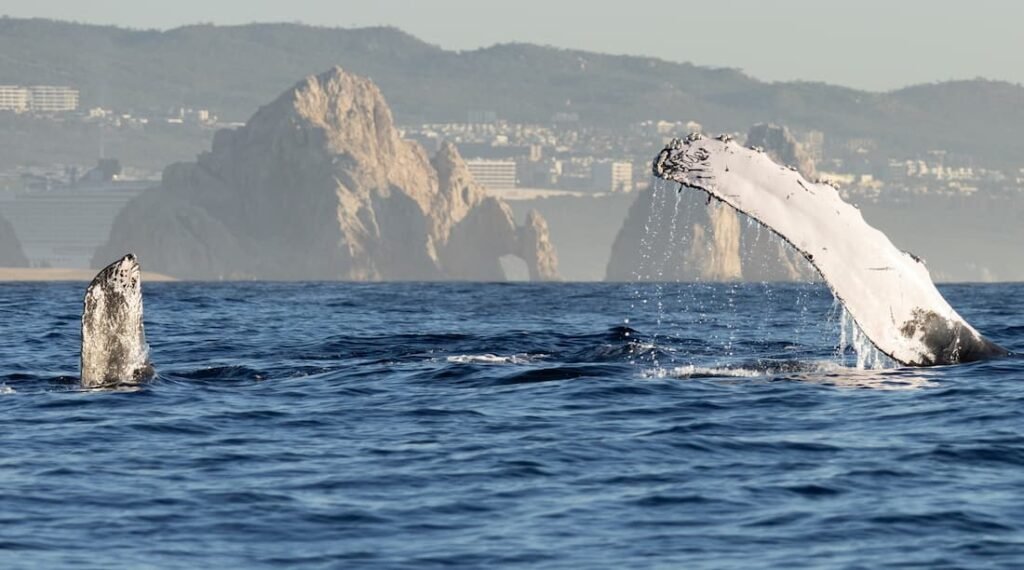
March: Excellent Opportunities to Observe Mothers and Calves
March remains an excellent month for whale watching in Cabo.
As the season progresses, visitors can continue encountering mother-calf pairs. Calves are growing stronger, becoming more coordinated swimmers and gradually preparing for their long migration north.
Some of the most memorable encounters happen when a mother and her calf surface together. The contrast between the size of an adult humpback and its young calf is remarkable.
What might you see in March?
Mothers and calves swimming together.
Calves practicing surface behaviors.
Humpback whales resting and traveling.
Occasional spectacular breaches.
Social interactions between different individuals.
March is an excellent choice for families, wildlife enthusiasts and photographers.
April: The Final Weeks of Whale Watching Season
April marks the final part of the official whale watching season in Cabo San Lucas.
As the northern migration approaches, many humpback whales begin leaving their winter breeding areas and traveling back toward their feeding grounds.
Sightings can become less predictable as the season progresses, but encounters are still possible throughout April.
What might you see in April?
-
Individual humpback whales traveling north.
-
Mothers and calves preparing for migration.
-
Occasional surface displays.
-
Whales resting and surfacing offshore.
If you are visiting Cabo in April, whale watching can still be worthwhile. However, I would recommend planning earlier in the month if seeing humpback whales is one of the main reasons for your trip.
What Types of Whales Can You See in Cabo San Lucas?
The main attraction during whale watching season in Cabo San Lucas is the humpback whale (Megaptera novaeangliae).
These marine mammals are famous for their enormous pectoral fins, complex underwater vocalizations and spectacular surface behaviors.
Adult humpback whales can reach approximately 12–16 meters in length and weigh around 25–40 tons.
Although humpback whales dominate the seasonal whale watching experience, other cetaceans can occasionally be encountered in the waters surrounding Baja California Sur.
Depending on the location and conditions, these may include:
Fin whales.
Sperm whales.
Pilot whales.
Orcas.
Different species of dolphins.
These encounters are less predictable and should not be considered guaranteed sightings during a standard humpback whale tour.
Why Do Humpback Whales Come to Cabo San Lucas?
Humpback whales undertake one of the most impressive seasonal migrations in the animal kingdom.
During the warmer months, many North Pacific humpback whales feed in productive northern waters, including areas around Alaska and British Columbia.
As winter approaches, they migrate thousands of kilometers south toward tropical and subtropical breeding areas in Mexico.
These warmer waters provide an important environment for mating, giving birth and early calf development.
Unlike their northern feeding grounds, the breeding areas are generally not places where humpback whales feed intensively.
Adult whales rely heavily on energy reserves accumulated during the feeding season.
This makes their migration particularly remarkable: they travel enormous distances while navigating different ocean conditions and relying on stored energy.
The waters surrounding southern Baja California are part of this broader winter migration and breeding region.
What Whale Behaviors Can You Observe During a Tour?
One of the most exciting aspects of whale watching is that every encounter is different.
You might spend several minutes observing a whale quietly surfacing and diving, or suddenly witness an incredible breach just a short distance away.
Here are some of the behaviors you may encounter.
1. Breaching: When Whales Jump Out of the Water
Breaching is one of the most spectacular whale behaviors.
A humpback whale propels much of its enormous body out of the water before falling back onto the surface with a tremendous splash.
Scientists have proposed several possible explanations, including communication, social interaction and removing parasites. The exact function can vary and is not fully understood.
2. Tail Slapping
Humpback whales sometimes lift their powerful flukes above the water and strike the surface.
This behavior produces a loud impact that can be heard from a considerable distance.
Tail slapping may play a role in communication or social interactions.
3. Pectoral Fin Slapping
Humpback whales have exceptionally long pectoral fins.
They sometimes raise one fin and repeatedly slap it against the surface, creating splashes that can be seen from far away.
4. Spyhopping
Spyhopping occurs when a whale rises vertically in the water, bringing its head above the surface.
This behavior allows the whale to look around its surroundings.
It is a fascinating sight because you can briefly see part of the whale’s head and body before it disappears beneath the surface again.
5. Mother and Calf Interactions
Watching a mother humpback whale swimming with her calf is one of the most special encounters during whale season.
Newborn calves must learn how to swim efficiently, surface to breathe and coordinate their movements.
The mother stays close, providing protection and guidance while the calf develops the strength needed for the migration north.
These encounters are particularly important to observe responsibly, as mothers and young calves are vulnerable to repeated disturbance.
Can You See Baby Whales in Cabo San Lucas?
Yes! Cabo San Lucas is an important winter destination for humpback whales, including females that give birth in Mexican breeding areas.
Humpback whale calves are born underwater and must reach the surface to take their first breaths.
During their first months, calves depend on their mothers for milk, protection and guidance.
They are born with a thick layer of blubber that helps them maintain body temperature, but they still need time to develop the strength and endurance required for their first long migration.
One of the most fascinating things to observe is how calves practice swimming, surfacing and diving alongside their mothers.
A mother-calf encounter is often quieter than a spectacular breach, but it can be just as memorable.
When observing these pairs, it is essential to respect their space and avoid any action that could interrupt their natural behavior.
Does Weather Affect Whale Watching in Cabo?
Yes. Ocean conditions are an important part of any whale watching experience.
Although whales migrate according to biological and seasonal patterns, weather and sea conditions can influence when and where boats can safely operate.
Cabo San Lucas is located where the Pacific Ocean meets the Sea of Cortez. This creates a dynamic marine environment influenced by wind, currents, swell and changing ocean conditions.
Some days offer calm seas and excellent visibility, while others may bring stronger winds, waves or uncomfortable conditions offshore.
What is the best time of day for whale watching?
Morning departures can offer favorable conditions, particularly when winds increase later in the day.
However, there is no guaranteed best hour for whale sightings. Whales can be active throughout the day, and their behavior does not follow a predictable tourist schedule.
The most important factors are choosing suitable ocean conditions and operating safely.
Can whale watching tours be canceled because of weather?
Yes. If wind, waves or other conditions make navigation unsafe, a responsible operator may postpone or cancel a departure.
Safety should always come before attempting to reach a whale watching area.
What Is the Best Way to Experience Whale Watching in Cabo San Lucas?
Not all whale watching experiences are the same.
When choosing a whale watching tour, consider more than just the boat ride or the possibility of seeing a whale.
A good wildlife experience should allow you to observe animals while learning about their biology, behavior and natural environment.
Here are a few things worth considering before booking:
Boat size and group size: Consider how many passengers will be onboard and how comfortable you will be during the excursion.
Experienced crew: Choose an operator with knowledge of local marine wildlife and responsible observation practices.
Time on the water: Allow enough time to search for whales without rushing the experience.
Hydrophone availability: Some boats carry underwater microphones that allow passengers to listen to whale vocalizations.
Responsible practices: Make sure the operator respects the applicable Mexican whale watching regulations.
Why Listen to Whales with a Hydrophone?
Whale watching is not only about what you see above the surface.
Humpback whales produce complex underwater vocalizations, commonly known as whale songs.
With a hydrophone, passengers can listen to sounds traveling through the water and discover another dimension of the whale watching experience.
Hearing these sounds while observing whales in their natural environment can make the excursion even more memorable.
Responsible Whale Watching: Protecting Whales in Their Natural Environment
Whale watching can create unforgettable experiences, but it also comes with a responsibility to protect marine wildlife.
In Mexico, whale watching activities are regulated under NOM-131-SEMARNAT-2010, which establishes guidelines for the protection and conservation of whales and their habitat.
Responsible operators must follow the applicable authorization conditions and observation rules.
Some important principles include:
Never chase or intentionally pursue whales.
Maintain the legally required observation distances.
Avoid sudden changes in speed or direction near whales.
Never attempt to touch, feed or swim with wild whales.
Give special consideration to mothers with calves.
Avoid interfering with the animals’ natural movements.
The objective of responsible whale watching is simple: observe wildlife without changing its behavior or compromising its well-being.
At Animalia Ocean Excursions, we believe the best encounters happen when we allow nature to lead the experience.
Frequently Asked Questions About Whale Watching in Cabo San Lucas
When does whale watching season start in Cabo San Lucas?
The general humpback whale season runs from December through April. For the 2026–2027 season, authorized commercial whale watching in the Cabo San Lucas protected area begins December 15, 2026, and ends April 30, 2027.
What is the best month to see whales in Cabo San Lucas?
January, February and March are generally excellent months for whale watching. February and March are identified as peak viewing months in the International Whaling Commission’s Mexico guide.
Can you see whales in Cabo San Lucas in December?
Yes. Humpback whales begin arriving in the region around the beginning of the winter season. The official authorized observation period for Cabo San Lucas starts December 15 in the 2026–2027 season.
Can you see baby whales in Cabo?
Yes. Humpback whales give birth in their winter breeding areas, and visitors may encounter mothers swimming with young calves during the season.
Are whales in Cabo San Lucas in April?
Yes. April is the final month of the official whale watching season in Cabo San Lucas. Sightings remain possible, although whale distribution and activity can change as animals begin their migration north.
How long does a whale watching tour last?
Tour durations vary by operator and boat. Many excursions last approximately two to three hours, providing time to travel offshore, search for whales and observe their natural behavior.
Is whale watching in Cabo worth it?
For anyone interested in marine wildlife, whale watching is one of the most memorable seasonal experiences in Los Cabos. Seeing a humpback whale breach or a mother swimming with her calf in the wild is something that cannot be replicated in an aquarium or on a screen.
Are whale sightings guaranteed?
No. Whales are wild animals, and their movements and behavior cannot be controlled. Even during peak season, sightings cannot be guaranteed on a specific departure.
Experience Whale Watching with Animalia Ocean Excursions
The ocean is full of surprises, and every whale watching trip is different.
At Animalia Ocean Excursions, we believe whale watching should be more than simply looking for a whale and taking a photograph.
It is an opportunity to understand marine wildlife, observe natural behaviors and connect with the ocean.
Our whale watching experiences in Cabo San Lucas combine wildlife observation with an educational approach. We use hydrophones to introduce passengers to the underwater sounds of whales and share our knowledge of marine life throughout the excursion.
Whether you encounter a spectacular breach, hear the sounds of a humpback whale underwater or observe a mother swimming with her calf, we want you to leave with a deeper appreciation for these incredible animals.
Planning your visit to Los Cabos during whale season?
Join Animalia Ocean Excursions for a whale watching experience in Cabo San Lucas.
Discover our Whale Watching Tours in Cabo San Lucas
Observe. Learn. Respect the Ocean.
Article reviewed for the 2026–2027 whale watching season. Seasonal dates and regulations should be checked against the latest official SEMARNAT notices before each annual update.